6-Week Step 1 High-Yield Study Plan: Your Roadmap to Exam Success
Posted onKey Takeaways:
- A data-driven, structured 6-week study plan, starting with baseline diagnostics and focusing on high-yield systems, can significantly improve Step 1 scores, especially when active recall methods are prioritized.
- Efficient use of proven resources (UWorld, First Aid, Pathoma, and Anki) combined with personalized academic advising and wellness support is critical for maintaining focus, motivation, and well-being during intensive preparation.
- International and Caribbean medical students can optimize their Step 1 success by leveraging institutional support services, tailoring their study schedule to individual needs, and maintaining a balanced approach to both academics and personal wellness.
A focused 6-week Step 1 high-yield study plan can boost student readiness by an average of 15-20 points when they prioritize active recall strategies over passive review. The difference lies in students who use data-driven diagnostics to identify weak areas early and target high-yield content with proven memory techniques. Success comes from understanding the USMLE Step 1 format and building study habits that translate directly to exam performance.
Building on this foundation, your preparation needs three core elements: baseline assessments that guide your focus, daily active recall blocks that compound learning, and wellness supports that sustain your energy. The weeks ahead will cover a detailed schedule, resource prioritization, time management tactics, and strategies designed for international students preparing for this career-defining exam.
Explore how American Canadian School of Medicine’s comprehensive academic advising and wellness resources can support your intensive exam preparation.
Build Your 6-Week Framework: Diagnostics, Resources, and Daily Blocks
The most effective 6-week Step 1 high-yield study plan begins with a precise assessment of your knowledge gaps and a systematic daily structure. Instead of diving into an unfocused review, successful students create a data-driven framework that targets specific weaknesses while maintaining sustainable learning habits. This structured approach transforms your preparation period from overwhelming chaos into a focused, measurable progression toward your target score.
Start With Baseline Diagnostics to Map Your Path
Take a baseline NBME within your first three days to identify which systems need the most attention. Follow this with a 40-question UWorld sample covering your weakest areas to see how concepts translate into actual test questions. These diagnostics reveal whether you need to focus on foundational knowledge gaps or question interpretation skills. Set a realistic target score based on your baseline, adding 15-25 points as a reasonable goal for this timeframe.
ACSOM’s comprehensive Step 1 preparation resources and webinar can help you interpret these results and adjust your timeline accordingly.
Structure Two Daily Learning Blocks With Focus Cycles
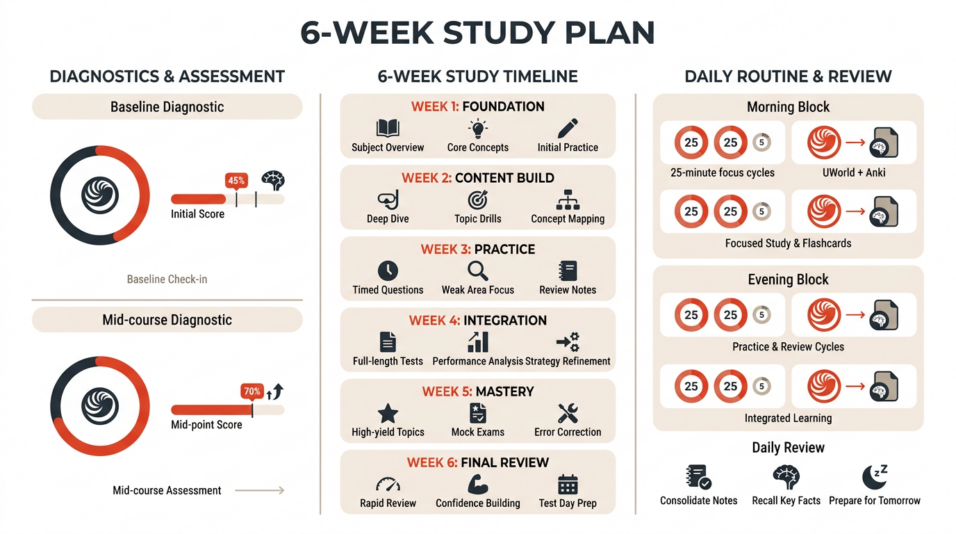
Building on your diagnostic insights, design two core learning blocks each day, typically 3-4 hours in the morning and 2-3 hours in the afternoon or evening. Within each block, use 25-minute focus cycles followed by 5-11-minute breaks to maintain intensity without mental fatigue. This rhythm prevents diminishing returns from marathon sessions. Schedule your most challenging material during your peak energy hours, usually in the first daily block. The comprehensive student support and wellness services at ACSOM emphasize this balanced approach to prevent burnout during intensive preparation periods.
Sequence High-Yield Systems and Integrate Spaced Retrieval
With your daily structure established, start with pathology-heavy systems like cardiovascular, respiratory, and gastrointestinal because they appear frequently and build foundational understanding for other topics. Follow the same system sequence used in medical school curricula, which mirrors how concepts build upon each other. Integrate Anki cards for spaced retrieval, but limit new cards to 20-30 per day so review doesn’t overwhelm your active learning time.
This sequencing approach, similar to what’s outlined in ACSOM’s systematic curriculum structure, allows knowledge to compound over your preparation period rather than competing for mental space.
Week-by-Week Schedule and Time Management Tactics
Effective time management strategies for a 6-week Step 1 preparation plan require structured progression and evidence-based spacing. Research shows that retrieval practice and spaced learning significantly improve long-term retention when applied systematically. Here’s your chronological roadmap:
- Weeks 1-2: Foundation Building – Target pathology-heavy systems (cardiovascular, renal, respiratory) with 40-80 daily UWorld questions in subject-specific blocks. Complete two review passes for each missed concept through same-day analysis to reinforce developing knowledge areas. Establish 25-minute study cycles with brief breaks to maintain focus.
- Weeks 3-4: Integration and Assessment – Transition to mixed-system UWorld blocks to build pattern recognition across disciplines. Schedule two NBME practice exams during this phase, with complete score review completed immediately to identify persistent knowledge gaps. Access student support services for academic advising as study demands increase.
- Weeks 5-6: Simulation and Mastery – Practice under official test conditions twice weekly, simulating the full 280-question, seven-block format. Allocate 60% of study time to your lowest-scoring NBME systems while maintaining light review of stronger areas. Reduce daily question volume during the final 48 hours to protect sleep and optimize recall.
- Ongoing Wellness Strategy – Throughout all phases, balance intensive preparation with personal well-being by scheduling regular breaks, maintaining social connections, and utilizing campus wellness resources when additional support becomes helpful.
Essential Resources and How To Use Them Efficiently
Focus on three proven tools that work together to maximize your high-yield resources for a 6-week USMLE Step 1 study plan. Smart choices and consistent use matter more than collecting every available option. These resources create a feedback loop where question practice reveals knowledge gaps, spaced repetition fills those gaps, and formal assessments track your progress.
- Make UWorld your daily question practice foundation – Complete 40-80 timed, random questions each day, then write brief error notes linking to specific First Aid or Pathoma pages for targeted review.
- Build long-term retention with strategic Anki use – Cap new cards at 20-30 daily to protect time for reviews, and use Sketchy Medical image mnemonics for rapid recall of microbiology and pharmacology concepts that connect to your UWorld mistakes.
- Track progress with two NBME checkpoint assessments – Schedule CBSSA forms at weeks 2 and 4 to identify weak systems, then analyze missed questions by concept to guide your UWorld topic selection and Anki card creation.
- Leverage your school’s digital library efficiently – Access platforms like Amboss, Lecturio, and Osmosis through ACSOM’s licensed subscriptions when UWorld explanations need deeper reinforcement, but avoid browsing these as primary study tools.
- Get personalized guidance from academic advisors – Work with ACSOM’s student support services to adjust your resource mix based on your diagnostic results and learning style preferences.
- Stick with your chosen combination after week 1 – Resist switching to new resources mid-plan, as familiarity with question formats and interfaces saves valuable time during your intensive study period.
FAQs: Personalizing a 6-Week Step 1 Study Plan
Every student brings different strengths, schedules, and learning preferences to Step 1 preparation. These frequently asked questions address the most common concerns about adapting a six-week timeline to your specific situation and maximizing your success as an international or Caribbean medical student.
What is the most effective 6-week Step 1 high-yield study plan for medical students?
The most effective plan combines diagnostic testing with targeted content review and active recall. Start with an NBME baseline to identify weak areas, then allocate 60-70% of study time to UWorld questions with immediate review. Prioritize systems based on the official content outline, which emphasizes pathology and clinical reasoning skills.
How can international and Caribbean medical students maximize their Step 1 score in six weeks?
International students should verify their USMLE eligibility early to avoid scheduling delays. Concentrate on U.S.-style clinical reasoning through UWorld and NBME practice exams. Leverage your school’s support systems, including academic advising and USMLE preparation programs, to create accountability and address knowledge gaps specific to your educational background.
Which proven resources are most important for a 6-week USMLE Step 1 study plan?
UWorld acts as your primary question bank for active learning and pattern recognition. First Aid provides a quick reference for fact review, while Pathoma covers targeted pathology concepts. Anki helps with spaced repetition for memorization-heavy topics like microbiology and pharmacology. Limit yourself to these evidence-based core resources to maintain clarity and avoid information overload.
How do you maintain motivation and manage stress during an intensive 6-week study period?
Break your daily schedule into manageable 25-minute study blocks with short breaks to prevent burnout. Set weekly mini-goals rather than emphasizing only the final exam date. Consider utilizing wellness resources like counseling services or study groups to maintain emotional balance and accountability throughout your preparation.
Should you adjust the 6-week plan based on your baseline NBME score?
Yes, your baseline score should guide your resource allocation and daily schedule. Students scoring below 60% correct should spend more time on foundational review with First Aid and Pathoma before diving into UWorld. Those scoring above 70% can concentrate primarily on UWorld and practice exams. Remember that Step 1 is now pass/fail, so aim for consistent performance above the passing threshold.
More FAQs: Rotations, Non-traditional Paths, and Scheduling
Managing Step 1 preparation alongside clinical responsibilities and personal commitments creates real scheduling challenges for medical students. These questions provide specific strategies for coordinating intensive study periods with your existing obligations and academic timeline.
How do you balance clinical rotations with a 6-week Step 1 high-yield study schedule?
Research shows that medical students average 12 hours per week studying during rotations. Schedule your intensive 6-week block between mandatory clerkships or during elective rotations. ACSOM’s curriculum structure builds USMLE prep into Year 2, making this an ideal time for concentrated study. Use mobile practice questions during clinical downtime and protect evening study blocks.
What time management strategies work best for a 6-week Step 1 preparation plan?
Implement the SIP (Study, Implement, Practice) framework with daily question quotas and targeted remediation cycles. Break study sessions into 25-minute focused blocks with 5-minute breaks to maintain intensity. Prioritize active recall over passive reading, and use UWorld analytics to identify weak areas quickly. Track daily progress and celebrate small wins to maintain momentum throughout the six weeks.
How can non-traditional students create a personalized 6-week Step 1 study plan?
Start with a diagnostic NBME to establish your baseline and identify knowledge gaps specific to your background. Non-traditional students often benefit from structured time management training and personalized study schedules. ACSOM’s student support services provide academic advising and wellness resources to help customize your approach based on your unique circumstances and learning style.
Can you modify the 6-week plan if you have limited study time each day?
Absolutely, compress the daily schedule by focusing on high-yield UWorld blocks and targeted review. If you can only study 3-4 hours daily, prioritize practice questions over passive reading and use spaced repetition apps during brief breaks. Extend the timeline slightly if needed while maintaining consistent daily engagement.
Commit To A Smart Plan and Leverage Support
A six-week timeline becomes achievable when you combine diagnostic testing, targeted resources, and structured daily blocks. Research shows that coaching interventions and personalized preparation strategies significantly improve outcomes and confidence among medical students.
Your path forward includes three key actions: schedule baseline diagnostics, build your two-block daily routine, and establish accountability through regular check-ins. Success in this intensive period requires more than just a preparation strategy.
Comprehensive Step 1 study support and wellness services can make the difference between surviving and thriving. Ready to pair your approach with personalized guidance and mental health resources? Explore ACSOM Student Support & Wellness Services for advising and coaching that keeps you on track during these six weeks.
