A Complete Guide to the Third Year Core Rotations Schedule Caribbean Medical School Students Follow
Posted onKey Takeaways:
- Strategic sequencing and planning of third-year core rotations are essential for building clinical competencies and maximizing success in U.S. and Canadian residency applications.
- ACSOM’s 48-week core rotations program mirrors North American standards, offering hands-on training in accredited U.S. hospitals, small class sizes, and direct mentorship to enhance clinical performance.
- Consistent evaluation, timely exam preparation, and proactive mentorship are key to securing strong letters of recommendation and standing out in the residency match process.
How you sequence your third-year rotations can meaningfully affect your performance on specialty exams. Your third year core rotations schedule, Caribbean medical school experience, becomes the foundation for your residency applications and clinical performance. How you sequence and structure these rotations determines whether you get basic clinical exposure or the standout preparation residency directors seek.
This strategic approach matters because a well-designed 48-week core rotation year spans six fundamental specialties: Internal Medicine, Surgery, Pediatrics, OB-GYN, Psychiatry, and Family Medicine. Each rotation builds specific competencies that U.S. and Canadian training programs expect from graduating medical students. The weekly time commitments, evaluation methods, and strategic sequencing all play a role in developing clinical skills and professional relationships. These elements open doors to competitive medical residencies.
Explore how American Canadian School of Medicine structures its clinical rotations program to maximize your readiness for North American residency training.
What is the Typical Third-year Core Rotations Schedule at a Caribbean Medical School?
Your third year clinical rotations represent the bridge between classroom learning and real patient care. For students like you who are committed to practicing medicine in North America, understanding how Caribbean medical schools structure their clinical year becomes the foundation for residency success.
The typical third-year core rotations schedule Caribbean medical school students follow follows the same rigorous framework used by U.S. and Canadian medical schools, giving you the clinical competencies and credentials that residency programs expect.
The Strategic 48-Week Core Framework
This comprehensive structure exists because it aligns perfectly with North American medical education standards and residency preparation requirements. Caribbean medical schools organize 48 weeks across six specialties: Internal Medicine and Surgery each receive 12 weeks, while Pediatrics, OB-GYN, Psychiatry, and Family Medicine span 6 weeks each. This distribution reflects the weight these specialties carry in USMLE Step 2 preparation and the clinical foundation you need for any residency specialty. The extended time in Internal Medicine and Surgery builds the diagnostic and procedural skills that form the backbone of medical practice.
Full-Time Clinical Preparation
You can expect to work 5 to 6 days per week during rotations, building the stamina and clinical rhythm that residency demands. Call responsibilities vary by site and rotation, with some evening and weekend commitments that mirror real hospital schedules. This comprehensive schedule prepares you for residency success while building the confidence that comes from hands-on clinical experience. ACSOM’s clinical rotations in accredited U.S. hospitals provide real clinical settings where you work directly with residents and attending physicians.
Smart Sequencing for North American Residency Success
The order of your rotations can significantly impact your performance and residency applications. Research on rotation sequencing shows that completing other core rotations — particularly surgery — before your internal medicine rotation is associated with stronger internal medicine shelf exam performance. Talk with your clinical affairs office about how your school sequences rotations and why. For Canadian students, this sequencing also aligns with the clinical competencies expected by Canadian residency programs. Medical schools across North America recognize that early exposure to primary care builds the clinical judgment needed across all specialties, making strategic scheduling a key component of your curriculum planning.
Core Rotation Requirements, Objectives, and Timeframes
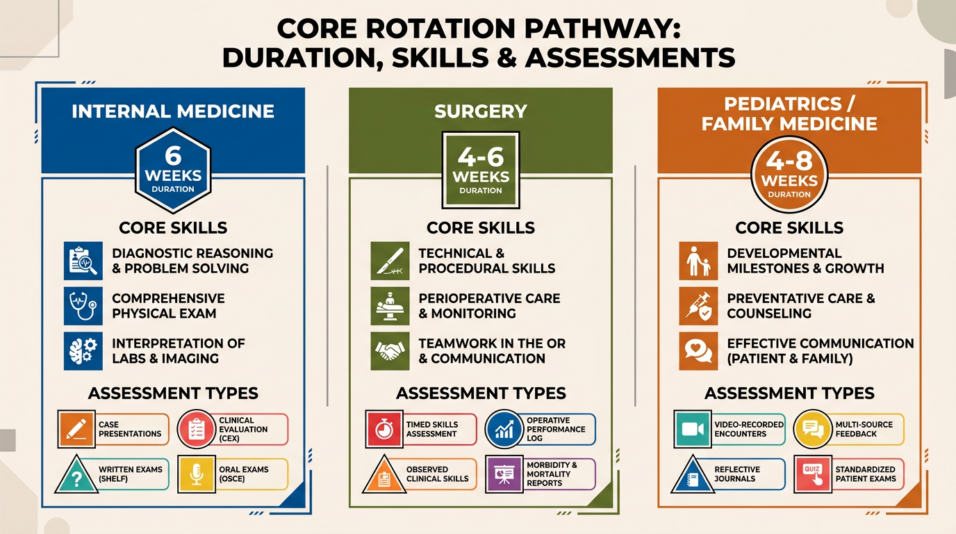
Planning your third-year clinical rotations becomes much clearer when you understand exactly what each core rotation requires and how it prepares you for residency success. Each rotation in ACSOM’s curriculum builds distinct competencies while preparing you for NBME subject exams and residency applications through structured assessments and hands-on patient care.
| Rotation | Duration | Core Skills | Typical Settings | Assessment Components | Notes
|
|---|---|---|---|---|---|
| Internal Medicine | 12 weeks | Diagnosis, management of complex medical conditions, clinical reasoning | Inpatient wards, ICU, emergency department | Attending physician evaluations, patient logs, NBME subject exam, and case presentations | Foundational rotation covering core diagnostic and management skills |
| Surgery | 12 weeks | Surgical procedures, pre/post-op care, sterile technique, trauma management | Operating rooms, surgical wards, trauma centers | Preceptor assessments, procedure logs, shelf exam, and surgical case discussions | Builds stamina and confidence through progressive call responsibilities |
| Pediatrics | 6 weeks | Child development, pediatric diseases, family communication, vaccination schedules | Pediatric wards, NICU, and outpatient clinics | 360-degree feedback, patient encounters log, NBME subject exam, growth chart assessments | Focuses on age-appropriate dosing and family communication |
| OB-GYN | 6 weeks | Labor and delivery, gynecologic procedures, prenatal care, reproductive health | Labor and delivery units, OR, women’s health clinics | Clinical evaluations, delivery logs, shelf exam, procedure counts | Includes both obstetric and gynecologic experiences |
| Psychiatry | 6 weeks | Mental health assessment, therapeutic communication, psychopharmacology | Inpatient psychiatric units, outpatient clinics, and psychiatric emergencies | Supervising physician evaluations, patient interaction logs, NBME subject exam, and mental status exams | Develops interview skills and treatment planning abilities |
| Family Medicine | 6 weeks | Preventive care, chronic disease management, patient education, and community health | Outpatient clinics, urgent care, community health centers | Preceptor feedback, patient panel management, shelf exam, continuity clinic logs | Emphasizes longitudinal patient relationships and preventive care |
Students completing rotations through accredited programs like ACSOM’s clinical partnerships benefit from standardized evaluation methods and direct faculty mentorship. This structured assessment approach, including clinical performance ratings and standardized exams, provides objective measures of your readiness for advanced clinical responsibilities and residency applications.
How Third Year Cores Prepare You for U.S. Residency Selection
Your third year rotations are where residency programs really get to see what kind of doctor you’ll become. The evaluations you receive from supervising physicians and your performance on standardized exams like the NBME subject tests create the foundation of your residency application. Research confirms that narrative comments from attendings matter significantly, and your clinical abilities need to match the Core EPAs (professional activities) that residency programs expect.
- Focus on consistent performance every day rather than hoping a few great moments will carry you, since attending evaluations reflects your overall reliability more than memorable highlights from weeks past.
- Time your NBME exams with smart planning by finishing Internal Medicine and Surgery rotations before your Step 2 CK study period, so your hands-on clinical experience reinforces what you’re studying for the boards.
- Request clinical experiences that match your interests, like inpatient medicine blocks if you want an internal medicine residency, or intensive labor and delivery weeks for OB-GYN goals, which help attendings write more specific recommendation letters.
- Keep detailed records of your patient encounters throughout each rotation so you can provide concrete examples when asking for letters of recommendation, since specific patient stories help attendings remember your contributions.
- Plan to complete all required rotations at accredited teaching hospitals, as ACSOM requires students to finish their full clinical training to maintain eligibility for Step 2 and the residency match process (NRMP).
- Take advantage of personalized mentorship through ACSOM’s clinical partnerships and small student groups, which give you direct access to attending feedback that helps refine your residency strategy throughout the year.
Third Year Core Rotations FAQ: Logistics, Evaluations, and Success Tips
Starting your clinical rotations represents a major transition from classroom learning to patient care. These frequently asked questions address the practical details that help you prepare effectively and maximize your performance during this pivotal year.
What prerequisites must I complete before starting third-year cores?
You’ll need current immunizations, background checks, drug screening, and malpractice insurance before beginning rotations. Most programs also require BLS and ACLS certification. The AAMC provides comprehensive checklists for U.S. rotation requirements. Start the application process 8-12 weeks before your rotation start date. Review ACSOM’s transfer student requirements for additional documentation needed.
How are students evaluated during core rotations?
Patient care evaluations combine multiple assessment methods, including direct observation, encounter logs, and professionalism ratings from supervising physicians. NBME subject exams are administered at rotation completion to measure knowledge. Most programs typically weight hands-on performance at approximately 60-70% and shelf exam scores at 30-40% of your final grade.
Can I complete my core rotations in the U.S. or Canada?
ACSOM students complete their clinical rotations at accredited U.S. teaching hospitals with established ACGME affiliations and small student-to-physician ratios. The school maintains partnerships in Los Angeles and plans expansion into additional U.S. states and Canada. International students should confirm their visa status allows clinical training, as requirements vary by program location.
What does a typical weekly schedule look like during rotations?
Expect full-time commitments of 50-60 hours weekly, typically starting between 6:00-7:00 AM Monday through Friday, with weekend call responsibilities. Surgery and internal medicine rotations often include overnight call every fourth to sixth night. Schedule dedicated study blocks during evenings and weekends for the shelf exam preparation.
How do I secure strong letters of recommendation?
Request letters from attendings who directly supervised your patient care during the final 2 weeks of each rotation. Provide a brief CV, case log summary, and your specialty interests when asking. The best letters come from physicians who observed your bedside reasoning and patient interactions consistently. Ask while your performance is fresh in their memory.
When should I plan to take Step 2 CK?
Schedule Step 2 CK after completing internal medicine and surgery rotations, typically during months 6-8 of your hands-on year. This timing allows you to apply core knowledge while it’s current. Plan for 6-8 weeks of dedicated study time, and coordinate with your curriculum timeline to avoid conflicts with high-stakes rotations.
Build a High-Impact Third Year and Secure Your Residency Path
Your third-year success starts with strategic planning before you step onto the wards. Map your 48-week rotation year early, scheduling dedicated study periods before NBME subject exams and requesting rotation sites that align with your specialty interests within the first 24 weeks.The AMA recommends scheduling clinical clerkships strategically to maximize learning and residency preparation opportunities.
Beyond strategic planning, strong mentorship transforms good clinical performance into standout residency applications. Schedule feedback sessions with attending physicians every 2 to 4 weeks, using their insights to refine your goals and clinical approach. Request letters of recommendation while your achievements are fresh in supervisors’ minds, providing them with your updated CV and case logs to strengthen their advocacy for your residency applications.
Ready to experience clinical rotations and Caribbean medical school hands-on training that prepares you for North American residency success? Explore ACSOM’s Clinical Rotations to discover accredited U.S. hospital placements, small student-to-physician ratios, and personalized mentorship that positions you competitively for residency matching.
