Guide to Canadian Residency Eligibility for Caribbean MDs
Posted onKey Takeaways:
- Canadian residency is accessible for Caribbean MDs who meet three core requirements: graduation from an accredited medical school, passing required Canadian exams, and holding Canadian citizenship or permanent residency (with some provincial variations).
- Early and strategic preparation, including timely exam scheduling, document collection, and targeted clinical experiences significantly improve your competitiveness in the CaRMS match.
- Leveraging ACSOM’s accredited curriculum, personalized mentorship, and support for Canadian clinical placements gives graduates a strong foundation to succeed in the Canadian residency application process.
Every year, hundreds of Caribbean medical graduates successfully match into Canadian residency programs through the CaRMS system. The path requires strategic planning around three core requirements: graduating from an accredited Caribbean medical school, passing required exams, and meeting citizenship or permanent residency status for most provinces.
Understanding this pathway, Canadian residency eligibility for Caribbean MDs depends on navigating specific requirements that vary by province and specialty. This guide outlines required documentation, exam timelines, and proven strategies to strengthen your application competitiveness. With proper preparation and personalized support, your Caribbean medical education can open doors to a successful residency match in Canada.
Eligibility Pathway: From Caribbean MD to CaRMS Application
If you’re like many talented students who faced limited seats in North American medical schools, the path to Canadian residency through a Caribbean medical education is both achievable and well-defined. Canadian residency requirements for Caribbean medical graduates center on three clear standards that, with proper planning, position you for success. Understanding these standards and provincial differences early in your medical education gives you the confidence and direction needed to build a competitive application.
Three Clear Standards Open the Door to Canadian Residency
Your eligibility rests on meeting three straightforward criteria that thousands of international medical graduates have successfully navigated. Your medical degree must come from a school listed in the World Directory of Medical Schools and recognized by Canadian medical authorities. ACSOM’s full accreditation through the Independent Accreditation and Recognition Review (IAAR) and World Directory listing ensures you meet this standard.
You’ll also need to pass the National Assessment Collaboration (NAC) Examination, which tests clinical skills through standardized patient encounters. Most provinces also require Canadian citizenship or permanent residency status, either at application time or before starting your program. Many residency programs prefer or require the Medical Council of Canada Qualifying Examination Part I, making it a wise addition to your preparation.
Smart Timeline Planning Prevents Application Roadblocks
Starting your exam preparation and document collection 12 to 18 months before CaRMS deadlines transforms what could be stressful scrambling into manageable, confident preparation. Schedule your NAC examination 8 to 12 months before applications open, allowing time for a retake if needed. Plan to complete MCCQE at least 6 months before submission deadlines, as score processing takes several weeks. It is also smart to register for the exam well in advance so that it can be taken close to where you reside. Request official transcripts and begin gathering reference letters 6 months in advance.
ACSOM’s student support team helps coordinate these timelines and ensures you stay on track. This structured approach means you’ll submit a complete, polished application while others rush to meet CaRMS eligibility deadlines.
Provincial Differences Create Strategic Opportunities
Rather than viewing provincial variation as a barrier, smart applicants use these differences to find the best fit for their goals and circumstances. Some regions prioritize return-of-service commitments in underserved communities, while others focus more heavily on exam scores or research experience.
Canadian students at ACSOM benefit from early guidance on these regional opportunities. Research which areas align with your career interests, family considerations, and willingness to serve in rural or remote locations. This targeted approach helps you focus your clinical electives, research projects, and application materials where they’ll have the greatest impact.
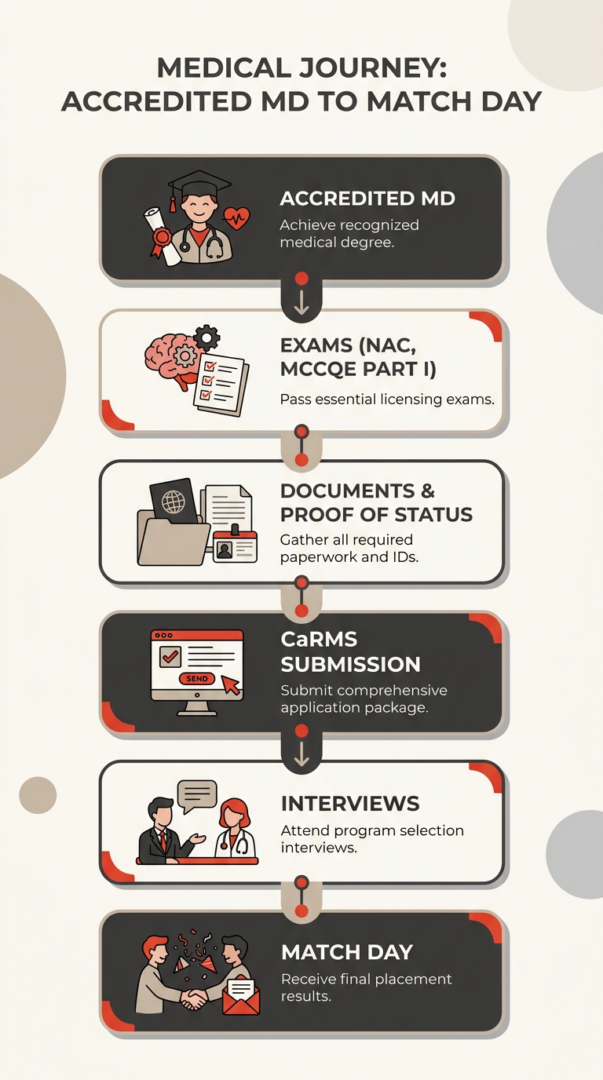
Required Exams, Credentials, and Documentation Checklist
Success in the CaRMS match depends on having the right paperwork ready months before submission periods open. Missing even one requirement can disqualify an otherwise strong application.
What documents do Caribbean medical graduates need for Canadian residency eligibility? The requirements span three main areas: standardized exams, academic credentials, and personal documentation that may vary by province.
- Create a PhysiciansApply.ca account. This is the Medical Council of Canada’s portal for registering for exams and verifying your credentials, and it’s required before you can book the NAC or MCCQE.
- Complete the NAC examination and schedule results to arrive before the CaRMS submission periods.
- Pass MCCQE Part I where required by specific programs or provinces.
- Verify your medical school appears in the World Directory of Medical Schools through ACSOM’s accreditation.
- Secure official transcripts and the Medical Student Performance Record from ACSOM admissions support.
- Prepare citizenship or permanent residency proof, reference letters, and program-specific materials.
Start gathering these materials 12 to 18 months before your target match year. Early preparation prevents deadline complications that can derail your application timeline.
How Caribbean MDs Can Improve Their Chances of Matching in Canada
Meeting eligibility requirements gets you in the door, but standing out requires strategic planning. Successful Caribbean graduates prioritize building meaningful Canadian clinical relationships and demonstrating long-term commitment to Canadian healthcare.
The question of how Caribbean MDs can improve their chances of matching to a Canadian residency program comes down to three key areas: exposure, targeting, and preparation. Here are the most effective strategies:
- Secure Canadian clinical electives in your target provinces to earn trusted local evaluations and reference letters.
- Choose specialties and provinces where your profile fits best, researching match rates and return-of-service requirements.
- Complete observerships with Canadian supervisors to build relationships and demonstrate cultural fit.
- Target provinces with higher IMG acceptance rates while understanding provincial criteria differences.
- Leverage structured interview preparation and research opportunities with Canadian faculty mentors.
ACSOM students benefit from accredited clinical rotations in U.S. hospitals and emerging Ontario placements, plus the unique Brock MD-MPH pathway that provides direct Canadian academic credentials and networking opportunities. The school’s comprehensive residency preparation approach includes personalized mentorship and small-cohort support throughout the process.
These strategies work best when implemented early and consistently. The next section addresses common questions about Canadian residency eligibility that can help you plan your timeline effectively.
Canadian Residency Eligibility for Caribbean MDs: FAQs
Understanding Canadian residency requirements as a Caribbean medical graduate can feel overwhelming with changing provincial rules and exam requirements. These answers address the most pressing questions about eligibility, timing, and strategy to help you plan your pathway confidently.
Are Caribbean medical degrees recognized for residency in Canada in 2026?
Yes, Caribbean medical degrees are recognized, provided your school is listed in the World Directory of Medical Schools and meets CaRMS eligibility criteria. ACSOM graduates are eligible to participate in CaRMS and sit the required Canadian exams. Recognition depends on accreditation status, not geographic location.
Do most jurisdictions require Canadian citizenship or permanent residency for IMGs?
Most jurisdictions require Canadian citizenship or permanent residency at the time of application or residency start date. Some regions, like Ontario, have additional restrictions, including high school attendance criteria for first-iteration positions. Check specific provincial qualifications early, as rules vary significantly.
Is MCCQE Part I mandatory to apply to, or only preferred by certain programs?
MCCQE Part I standards vary by jurisdiction and program. The NAC exam is typically required for CaRMS eligibility, while MCCQE Part I may be mandatory for some regions or preferred by specific programs. MCC pathways outline specific criteria. Complete both exams for maximum flexibility across all jurisdictions.
Which regions are more accessible to IMGs, and how do return-of-service agreements work?
Atlantic provinces, Saskatchewan, and Manitoba typically offer more IMG positions relative to applicant volume. Return-of-service agreements require graduates to practice in underserved areas for 3-5 years after residency completion. These commitments often provide visa sponsorship and guaranteed positions, but limit practice location flexibility initially.
Can temporary residents or work permit holders enter residency?
Atlantic provinces and some western jurisdictions accept temporary residents with valid work permits, though most prefer citizens or permanent residents. You must demonstrate legal authorization to work in Canada throughout residency training. Standards change frequently, so verify current provincial policies when planning your application timeline and immigration status.
When should the NAC exam be written relative to CaRMS timelines?
Write the NAC exam by the spring of the year before your intended CaRMS application to allow for retakes if needed. Results must be available before document submission deadlines, typically in January. ACSOM’s structured preparation through clinical rotations and mentorship helps students plan exam timing strategically.
Do USMLE exams help in Canada, and should they be pursued alongside MCC exams?
USMLE scores may strengthen your application, but cannot substitute for the required Canadian exams like the NAC. Focus on MCC exams first for Canadian residency, then consider USMLE if pursuing dual-country applications. Parallel preparation is possible but requires careful time management and prioritization.
Turn Eligibility Into a Competitive Application
Success in Canadian residency matching requires strategic planning that goes beyond meeting basic requirements. Start mapping your timeline now, booking required exams well ahead of deadlines, and building meaningful clinical relationships through Canadian electives and mentorship. What separates eligible candidates from competitive ones? Thoughtful preparation and genuine connections to your target provinces.
This strategic approach requires the right educational foundation. Through small class sizes, personalized mentorship, and integrated training at certified U.S. teaching hospitals, ACSOM provides the clinical experience and guidance that strengthen your CaRMS application. As an accredited Caribbean medical school focused on Canadian residency preparation, our comprehensive training program gives you the foundation needed to compete successfully in the Canadian match.
Ready to begin your journey toward Canadian residency? Apply to ACSOM today and take the first step toward your medical career in Canada.
