Medical Specialty Lifestyle Comparison: Which Specialty Fits Your Life Goals?
Posted onKey Takeaways:
- Choosing between surgical and non-surgical specialties significantly impacts your work hours, compensation, training length, and work-life balance, making it essential to align your specialty choice with your personal values and life goals.
- Surgical specialties typically offer higher earning potential and procedural intensity but require longer training and less predictable schedules, while non-surgical fields provide more stable hours, earlier autonomy, and greater flexibility in practice settings.
- ACSOM’s curriculum and U.S.-based clinical rotations are designed to expose students to both specialty paths, supporting informed decision-making through personalized mentorship and hands-on experience.
Choosing your medical specialty shapes not just your career but your entire life. Research confirms this reality; according to Medscape’s 2024 physician survey, lifestyle satisfaction varies dramatically across specialties. A comprehensive medical specialty lifestyle comparison reveals that work hours, compensation, and patient interaction styles create distinct career paths. The difference between a surgeon’s unpredictable call schedule and a dermatologist’s clinic-based routine affects everything from family time to financial planning.
Whether you’re drawn to the intensity of surgical procedures or the continuity of primary care, understanding these lifestyle factors before you commit to clinical rotations can save years of career regret. The key lies in identifying what daily work energizes you and what schedule aligns with your personal values and long-term goals.
At a Glance: Lifestyle Factors by Specialty Family
| Lifestyle Factor | Surgical Specialties | Non-Surgical Specialties
|
|---|---|---|
| Training Length | 5-7+ years (residency + fellowship) | 3-4 years (most residencies) |
| Typical Hours | 60-80+ hours/week; frequent overnight call | 45-60 hours/week; more predictable schedules |
| Call Structure | 24-hour call; weekend OR coverage | Night-float or home call; shift-based options |
| Compensation | Higher earning potential, procedure-based | Moderate, stable with benefits |
| Practice Flexibility | OR-dependent, hospital-based | Clinic, telehealth, part-time options |
These differences become clearer when you consider how training is structured. Many residency programs organize learning around 28-day blocks, which shape your monthly exposure to different rotations and call responsibilities. ACSOM’s curriculum follows this proven block-based approach to maximize your clinical learning.
For context, a surgical trainee might work a 63-hour week with two overnight calls, while a family medicine resident typically works approximately 48 hours with evening clinic coverage. Understanding these patterns helps you evaluate work-life balance by medical specialty and choose a path that aligns with your personal priorities.
ACSOM’s clinical rotations in accredited U.S. hospitals provide direct exposure to these specialty rhythms, helping you make an informed choice about your future practice.
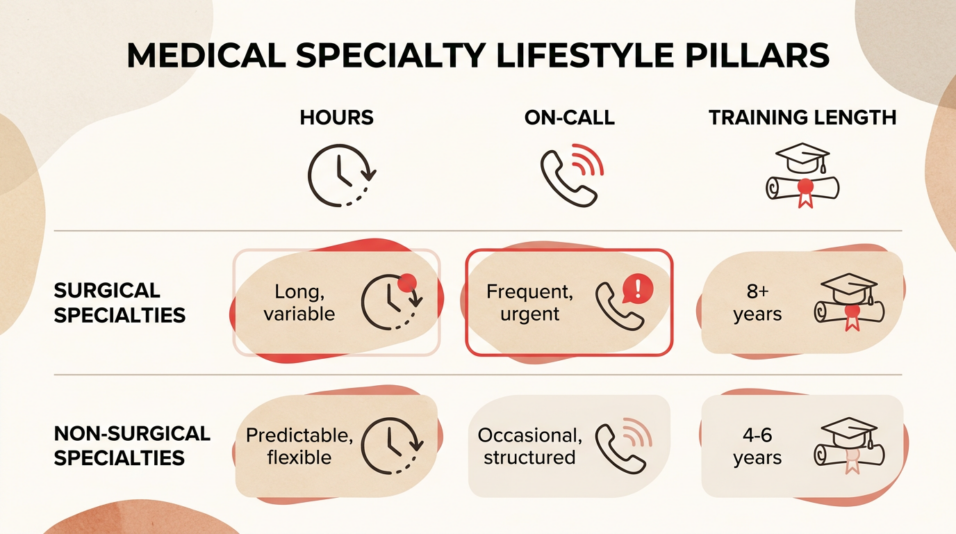
Understanding the Two Paths: Surgical and Non-Surgical
Picture yourself choosing between starting hospital rounds at 5 AM before a full day in the operating room, or seeing scheduled patients from 8 AM to 5 PM with predictable lunch breaks. This choice captures the heart of the surgical vs non surgical lifestyle decision that will shape your family time, sleep patterns, and income trajectory for decades to come.
These two broad career paths represent fundamentally different approaches to practicing medicine. While both require dedication and clinical excellence, they create distinct daily rhythms that affect everything from when you eat dinner with your family to how you structure your weekends. Understanding these differences now helps you choose a specialty that matches your personal values and long-term life goals.
Let’s explore what defines each path and how they might fit your vision for your future medical career.
What Defines Surgical Specialties
Surgical specialties revolve around hands-on procedures, operating room time, and urgent patient situations that demand immediate decision-making. You’ll find yourself working in a team-based environment where cases can run longer than expected, and emergency procedures may call you in during off-hours.
During your training in surgical services, you’ll experience the intensity that defines surgical practice. A general surgeon might start rounds at 5 AM, spend eight hours in the OR, then handle evening consultations for emergency cases. Research shows that these extended work periods during training develop the experience and resilience needed for independent practice, though they require significant lifestyle adjustments.
Key characteristics you’ll encounter include:
- Operating room blocks that may extend beyond the scheduled time due to case complexity.
- Inpatient responsibilities, including post-operative monitoring and emergency consultations.
- Call rotations involving nights, weekends, and urgent procedures.
- Collaborative work with nurses, anesthesiologists, and surgical technicians.
What Defines Non-Surgical Specialties
Non-surgical specialties emphasize ongoing patient relationships, preventive treatment, and clinic-based work patterns that offer more predictable daily routines. You’ll focus on diagnosis, medical management, and long-term patient guidance rather than procedural interventions.
The curriculum structure at ACSOM ensures you gain substantial exposure to outpatient medicine and continuous patient relationships. A family physician typically sees scheduled patients from 8 AM to 5 PM, builds relationships over years, and handles most consultations during regular business hours. According to workforce data, many non-surgical specialties show different practice patterns that reflect their more predictable time commitments.
Key characteristics you’ll experience include the following:
- Clinic-based work patterns with defined appointment blocks and patient panels.
- Ongoing relationships with patients that develop over months or years.
- Consultation work that typically occurs during regular business hours.
- Emphasis on medical management, counseling, and preventive interventions.
Both paths include significant variation within their categories. Emergency medicine operates on defined shifts despite being non-surgical, while some surgical subspecialties, like dermatology, may offer more predictable daily routines. The key is matching these work patterns with your preferences for patient interaction, time flexibility, and professional satisfaction.
Your medical education at ACSOM prepares you for success in either direction, giving you the clinical foundation and career guidance to make an informed choice that aligns with your life goals.
Breaking Down Career-Defining Differences
The difference between a 6 AM surgery start and a 9 AM clinic schedule might seem small, but it shapes everything from your family dinner plans to your long-term career satisfaction. For driven students like those ACSOM serves, understanding these trade-offs early helps align specialty choice with personal values. When you examine procedural versus cognitive fields across five core pillars, the path that fits your goals becomes clear.
Hours and Call Demands
Medical residency hours by specialty vary significantly, though all programs follow ACGME guidelines limiting work to 80 hours per week averaged over four weeks. Recent AMA research shows residents average 63.6 total hours weekly, with substantial variation by field. Surgical pathways typically require greater time commitment early in training, while clinic-based disciplines often provide more predictable schedules from the start.
| Aspect | Procedural Specialties | Cognitive Specialties
|
|---|---|---|
| Typical Training Hours | 65-75 hours/week with OR blocks | 50-65 hours/week with clinic focus |
| Call Frequency | Every 3-4 nights, weekend coverage | Every 5-7 nights, some home call |
| Schedule Predictability | Variable due to emergency cases | Structured clinic appointments |
Winner: Cognitive specialties for predictable schedules and better work-life integration during training.
Compensation and Earning Trajectory
Procedural fields generally command higher compensation due to technical skills and billing structures, while cognitive disciplines offer steady income with different trade-offs. Your earning potential depends heavily on subspecialty choice and geographic location. Practice setting can significantly impact compensation regardless of the specialty family.
| Aspect | Procedural Specialties | Cognitive Specialties
|
|---|---|---|
| Starting Salary Range | $300,000-500,000+ annually | $200,000-350,000 annually |
| Income Growth Potential | High with subspecialization | Moderate with value-based care |
| Practice Overhead | 25-40% higher due to OR time, equipment, malpractice | 15-25% for clinic-based practice |
Winner: Procedural fields for higher earning potential, though cognitive disciplines offer financial stability with a more favorable time-to-compensation balance.
Training Length and Board Certification Path
Surgical pathways require longer commitments before independent practice, while cognitive fields often reach autonomy sooner. Students in ACSOM’s MD program gain early exposure through our comprehensive curriculum and structured rotations that help clarify specialty preferences during medical school.
| Aspect | Procedural Specialties | Cognitive Specialties
|
|---|---|---|
| Residency Duration | 5-7 years typical | 3-4 years typical |
| Fellowship Requirements | Often necessary for subspecialty | Optional for most fields |
| Time to Independent Practice | 6-8 years post-graduation | 4-5 years post-graduation |
Winner: Cognitive fields for a faster path to independent practice and earlier financial stability.
Practice Setting Flexibility
Clinic-based disciplines typically offer more diverse practice options, from academic medicine to telemedicine, while procedural fields require specific infrastructure and team support. Both paths can accommodate different preferences with thoughtful practice design and location selection.
| Aspect | Procedural Specialties | Cognitive Specialties
|
|---|---|---|
| Location Options | Limited by OR access and case volume | Flexible across diverse settings |
| Part-time Opportunities | Challenging due to call coverage needs | More readily available options |
| Remote Work Potential | Minimal except consultations | Growing with telemedicine expansion |
Winner: Cognitive disciplines for practice flexibility and diverse career options throughout your professional journey.
Patient Interaction and Continuity of Care
The nature of patient relationships differs markedly between procedural and cognitive fields, affecting long-term job satisfaction and professional fulfillment. ACSOM students gain exposure to both models through clinical rotations at accredited U.S. hospitals, helping them understand which patient interaction style aligns with their professional goals.
| Aspect | Procedural Specialties | Cognitive Specialties
|
|---|---|---|
| Patient Relationship Length | Episode-based, shorter duration | Long-term, ongoing relationships |
| Care Focus | Acute intervention and procedures | Prevention and chronic management |
| Professional Satisfaction | Immediate procedural outcomes | Gradual health improvements over time |
Winner: Cognitive specialties for physicians who value long-term relationships and preventive care impact, though procedural fields excel for those motivated by immediate, tangible interventions.
How to Choose: A 3-Factor Fit Test
Choosing the right specialty requires honest self-reflection about what sustains you over decades, not just what sounds appealing today. Research shows that personal fit and work-life balance rank among the top factors driving specialty selection. Learning how to choose a medical specialty means mapping your genuine preferences to real-world practice demands.
- Identify daily tasks that energize you – Complete a validated interest inventory and shadow across both surgical and non-surgical settings to see what feels natural.
- Assess your schedule predictability needs – Ask residents about call structure and review sample 28-day rotation blocks to understand true time commitments.
- Define the impact that motivates you – Consider whether you prefer ongoing relationships with continuity or high-intensity episodes with procedural focus.
- Map trade-offs explicitly – If you value evenings free and longitudinal care, non-surgical may fit; if you seek OR time and acute decision-making, surgical could be ideal.
- Seek mentorship throughout the process – Connect with faculty who understand both specialty demands and your personal goals.
Making this choice becomes much easier with the right educational foundation and support system.
Built for Your Success
Choosing a medical specialty is personal, but your preparation shouldn’t leave anything to chance. ACSOM understands that your specialty choice will shape your entire career, which is why we’ve built our program to prepare you for success wherever your interests lead.
Here’s how we deliver the ACSOM medical education advantages that set our graduates apart:
- Small class sizes with personalized mentorship – You’ll work directly with experienced faculty from top U.S. institutions who understand both surgical and non-surgical career paths.
- Hands-on clinical training in recognized U.S. hospitals – Our clinical rotations give you real exposure to diverse specialties and practice settings across multiple states.
- Non-profit structure focused on your outcomes – We prioritize student success over profit, with flipped-classroom learning and rigorous academics that match U.S. standards.
- Proven pathway to North American residencies – Our graduates successfully match into competitive programs across the U.S. and Canada, with dedicated residency advising throughout your training.
As a CAAM-HP accredited institution, ACSOM provides the credibility and preparation you need for NRMP and CaRMS applications. Our comprehensive curriculum combines case-based learning with early clinical exposure, while our faculty guides you through specialty exploration and helps you secure rotations that align with your career goals.
Ready to build the foundation for your medical career? Apply now to our medical degree program and take the first step toward the specialty that fits your life.
Choose Your Medical Path
The choice between surgical and non-surgical specialties depends on what energizes you each day and the daily demands and schedule patterns you can sustain over decades. Making this decision becomes clearer when you understand that medical students’ priorities often shift during training, making early clinical exposure and mentorship invaluable for realistic decision-making.
Some students excel with procedural work and variable hours. Others prefer ongoing patient relationships with predictable schedules. The key is to match your specialty choice with your personal priorities that truly matter to you long-term.
ACSOM’s accredited curriculum and U.S. clinical rotations give you hands-on exposure to both surgical and non-surgical specialties, while our experienced faculty provide personalized mentorship to help you make informed decisions. With small class sizes and proven pathways to U.S. and Canadian residencies, you’ll have the support and clinical foundation to pursue any specialty that matches your goals.
Ready to discover which specialty fits your goals? Apply now to ACSOM’s MD program and take the first step toward the medical career that fits your life.
Medical Specialty Lifestyle Comparison: FAQs
Which medical specialties offer the best work-life balance for physicians?
Many non-surgical fields like family medicine, dermatology, and pathology offer more predictable schedules, though your practice setting matters significantly. According to physician rankings by specialty, factors like schedule flexibility and hour tolerability differ significantly even within specialty families.
How do personal interests and values align with different medical specialty lifestyles?
If you value patient continuity and daytime clinic work, non-surgical paths often fit well. If you enjoy acute decision-making and procedural focus, surgical specialties may be ideal. Research shows that physician-scientists who align their roles with their interests report higher satisfaction regardless of specialty choice.
How do salary and lifestyle differ between surgical and non-surgical specialties?
Procedural fields typically earn more but require greater early-hour commitments during training and practice. Cognitive specialties tend to offer more routine schedules with moderate earnings, though organizational factors like leadership quality and values alignment significantly impact physician satisfaction across all specialties.
What are typical residency hours and on-call demands by medical specialty?
Hours change considerably by program and training year, with many schedules running on 28-day rotation blocks. Surgical training often involves longer weeks, while some non-surgical programs average fewer hours. Your clinical rotations at accredited U.S. hospitals will give you firsthand exposure to these realities across different specialties.
Can lifestyle be optimized after training?
Absolutely, practice design, group size, call-sharing arrangements, and geographic location can significantly reshape your hours and flexibility over time. Many physicians find that thoughtful career planning during medical school and residency sets the foundation for the lifestyle they want to build. ACSOM’s small class sizes and personalized mentorship help you explore these career opportunities with confidence.
