What Does a Day in the Life of a Surgery Rotation Medical Student Really Look Like?
Posted onKey Takeaways:
- A successful surgery rotation day for medical students starts early, requires thorough preparation, and involves a mix of patient care, operating room responsibilities, and documentation.
- Standing out during a surgery rotation is less about showmanship and more about clinical preparation, anticipating team needs, and actively seeking feedback.
- ACSOM’s placement of students in accredited U.S. hospitals with small group mentorship and high-acuity cases provides a strong foundation for residency and future clinical practice.
Most surgery rotation days start before 5 a.m., and those first hours often shape everything that follows. A surgery rotation medical student’s day unfolds hour by hour through discipline, teamwork, and clinical judgment, not just OR time.
ACSOM (American Canadian School of Medicine) places students in accredited U.S. hospital clinical rotations built around real surgical training.
What Does a Day on Surgery Rotation Look Like for a Medical Student?
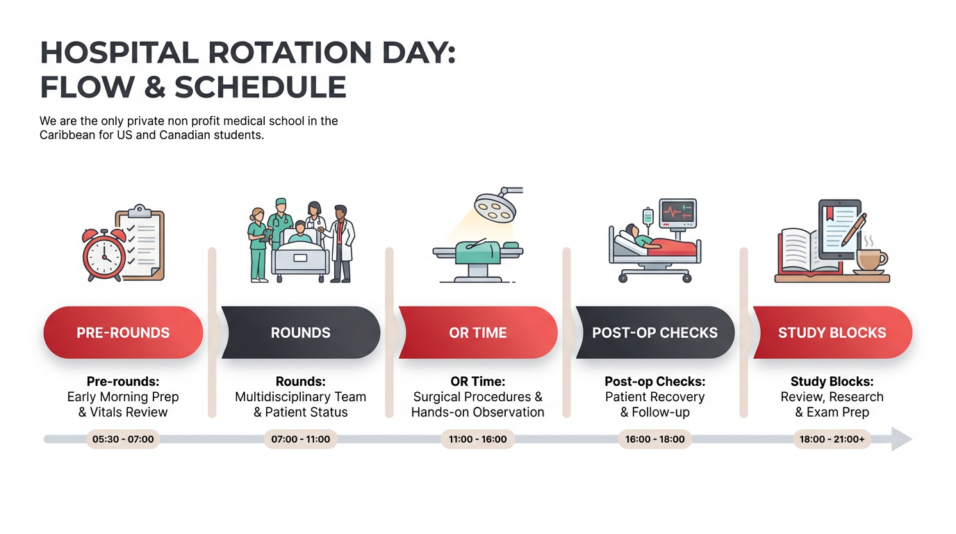
For any medical student, a day on surgery rotation follows a rhythm that most people outside medicine rarely see. It starts before sunrise, moves through a series of structured responsibilities, each with a distinct clinical purpose, and ends with review.
Pre-Rounds and Morning Rounds
Many students arrive well before 6:00 a.m. to check on their assigned patients before the team gathers. Pre-rounds mean reviewing vitals, labs, and overnight notes. When the attending and residents arrive, you need to present your patient clearly and concisely. A strong pre-round presentation builds credibility with the team from the start.
Operating Room Time
The OR is where the clinical demands of surgery rotation become most visible. Students observe, assist with retraction, and apply sterile technique under supervision. What matters most is preparation before the procedure begins: knowing the anatomy and the patient’s history. Students who arrive prepared can answer questions, anticipate steps, and engage more meaningfully.
Post-Op Care and Evening Study
After cases, students check on patients, help write progress notes, and follow up on labs. Evenings are for consolidating what the day taught and preparing to do it better tomorrow. The hours are long, but working through that pace builds the clinical efficiency that surgical teams depend on.
How Do Medical Students Prepare for a Surgery Rotation and What Happens During the Day?
Understanding how medical students prepare for a surgery rotation, and what actually happens during the day, starts the night before. According to the American College of Surgeons, reviewing patient history, procedure indications, and relevant anatomy before rounds is one of the most practical habits a student can build early in their clerkship, and it shows the moment rounds begin. At high-acuity sites like Desert Regional Medical Center, where trauma and surgical critical care cases are common, that preparation becomes even more important.
- Know your patients before rounds start. Be ready to present vitals, overnight events, and current status clearly, before the team has to prompt you.
- Anticipate what the team needs in the OR. Stay aware of your positioning, avoid touching anything marked sterile, and respond quickly when asked. Small contributions build trust over time.
- Ask questions at the right moment. The AMA’s surgical clerkship tips recommend saving questions for downtime or after a case, not mid-procedure. Timing reflects clinical maturity.
- Write notes and own your documentation. As outlined in the Johns Hopkins Surgery Clerkship, documentation is among the most weighted components of a student’s evaluation and shows the team you understand the patient’s full clinical picture, inside and outside the OR.
- Check in on patients after surgery. This teaches you what recovery actually looks like and connects outcomes back to decisions made in the OR.
Typical Responsibilities and Schedule for a Medical Student on Surgery Rotation FAQ
The typical responsibilities and schedule for a medical student on surgery rotation can be hard to anticipate before your first week. Students heading into surgery often wonder what the day actually demands of them, from how early to show up to what they’re permitted to do once they’re in the room.
How early do medical students usually arrive on surgery rotation?
Most surgery rotations begin between 5:00 and 6:00 AM. Pre-rounds happen before the attending arrives, giving students who show up early time to review their patients and organize notes. Arriving prepared tells the team you take the rotation seriously, according to ACS RISE guidelines.
What are medical students actually allowed to do in the operating room and on the surgical floor?
In the OR, students can hold retractors, cut sutures, and help with patient positioning. Floor responsibilities for a medical student on surgery rotation include writing progress notes, presenting patients, and following up on post-op patients. The AMA recommends introducing yourself to the scrub technician and circulating nurse as soon as you enter the room.
How can a student stand out without seeming overconfident or getting in the team’s way?
The answer is preparation, not showmanship. Know your patients’ histories, anticipate what the team might need, and ask questions when there’s a natural pause. Hopkins clerkship guidance emphasizes volunteering for tasks and actively asking for feedback rather than waiting until the end of the rotation.
Does the clinical setting affect what students actually experience on surgery rotation?
ACSOM students rotate through high-acuity U.S. hospital settings, including Desert Regional Medical Center, a Level 1 Trauma Center in Palm Springs, CA. These placements offer exposure to general surgery, trauma, and surgical critical care alongside active residency programs. Explore ACSOM’s clinical rotations and see what surgical specialties students encounter across their clinical years.
How the Right Training Environment Sets You Up for Residency
Clear expectations and close mentorship during surgical clerkships improve learning and reduce burnout, a qualitative study on surgical clerkship stressors found. Those same conditions build the professional habits, like clear patient presentations and composure under pressure, that residency programs look for.
Studies on student-to-physician ratios show that smaller groups give students more time with attendings, building the clinical confidence that carries into residency. ACSOM’s recently expanded clinical sites in Philadelphia reflect that same commitment to meaningful, hands-on access.
Take a closer look at how the American Canadian School of Medicine places students in accredited U.S. hospitals for surgical and specialty training through its hands-on clinical rotations program.
